
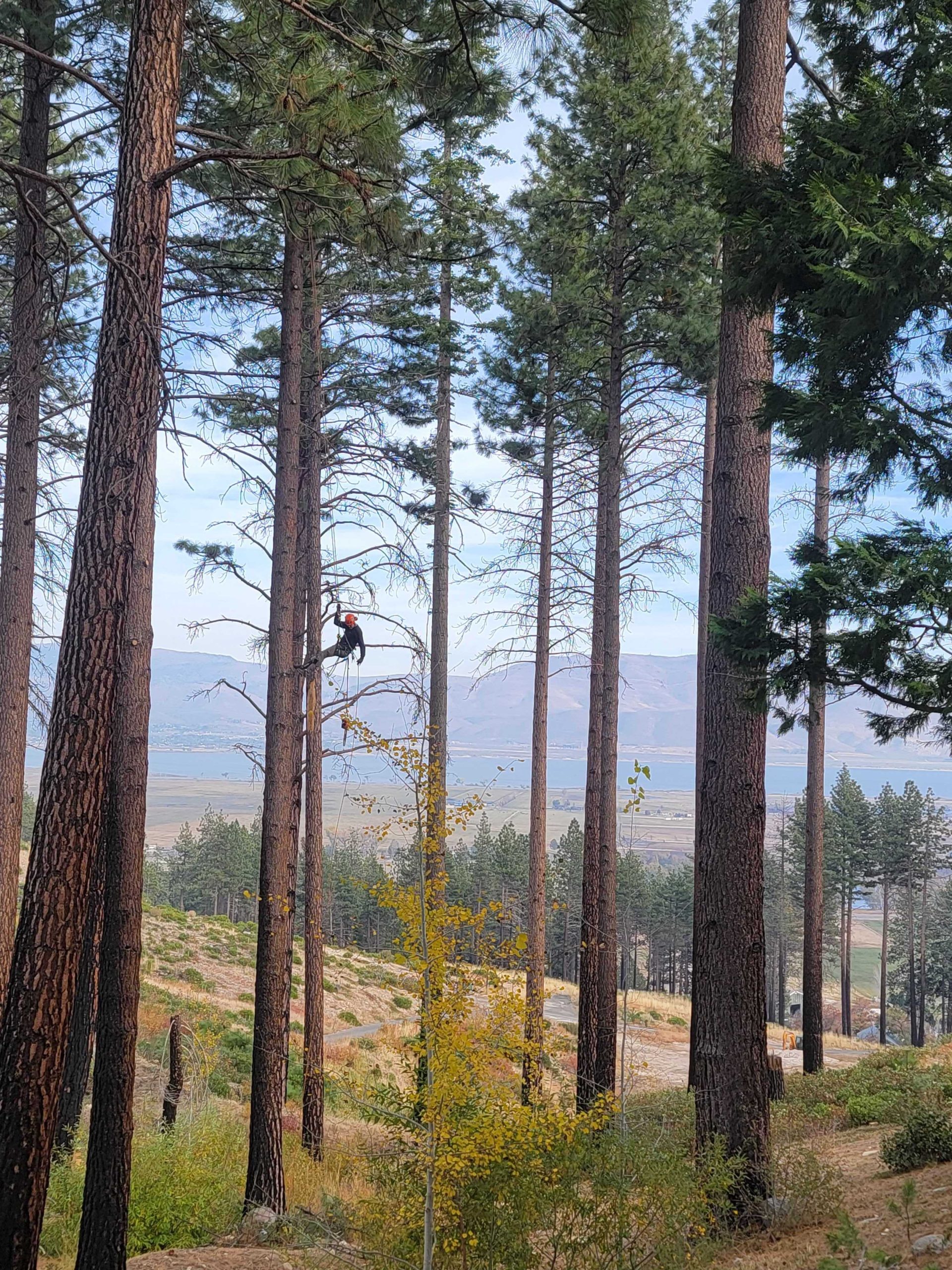
Winter in the Tahoe Basin can be hard on trees. Heavy snow, strong winds, freezing temperatures, and drought stress all put pressure on the forests surrounding your property.
By the time spring arrives and snow begins to melt, many trees have hidden damage that property owners may not notice right away.
A simple spring inspection can help you identify:
- Broken or hanging limbs
- Trees weakened by snow load
- Hazard trees near structures
- Signs of insect activity
- Trees that need pruning or removal
Catching these issues early can help prevent property damage and prepare your home for the upcoming summer wildfire season.
Jeremiah’s Tree Service has been helping homeowners across Truckee, North Lake Tahoe, Tahoe City, and surrounding Tahoe Basin communities manage safe and healthy trees since 1985.
This spring tree inspection checklist will help you walk your property and identify potential concerns.
Why Spring Tree Inspections Are Important in the Tahoe Basin
Trees in the Tahoe Basin face unique environmental pressures. Winters often bring heavy snowfall, strong winds, and freezing temperatures that stress trees throughout the region.
Some of the most common challenges Tahoe trees face include:
- Heavy snow load damage
- High wind exposure
- Drought stress
- Bark beetle activity
- Dense forest competition
- Wildfire risk
Snow accumulation during winter can place significant weight on tree branches. Even healthy trees may develop cracks, splits, or structural weaknesses.
Once temperatures warm in spring, these weakened limbs often begin to fail.
Inspecting your trees early in the season allows you to identify hazards before summer storms and wildfire season arrive.
Spring Tree Inspection Checklist
When snow begins to melt and you can safely access your property, take time to walk around your yard and surrounding forest areas.
Use the checklist below to identify potential problems.
Check for Broken or Hanging Limbs
Snow accumulation is one of the most common causes of branch failure in Tahoe trees.
Look closely for:
- Broken limbs caught in the canopy
- Branches hanging over roofs or driveways
- Cracks where limbs connect to the trunk
- Large branches bent downward from snow weight
These limbs can fall unexpectedly during spring wind events.
Jeffrey Pine and White Fir trees are especially susceptible to snow load damage due to their branch structure.
If you see large broken limbs or branches hanging above structures, they should be removed by a professional arborist.
Inspect Trees for Winter Storm Damage
Winter storms can cause structural damage that is not always obvious.
Walk around the base of larger trees and look for:
- Leaning trunks
- Fresh cracks in the bark
- Split branches
- Soil heaving around the roots
Heavy snow and wind can shift root systems, particularly during spring snowmelt when soil becomes saturated.
If a tree appears to lean more than it did previously, it should be evaluated for stability.
Look for Dead or Dying Trees
Dead trees are fairly common in the Tahoe Basin due to drought conditions and bark beetle activity.
Signs that a tree may be dead or declining include:
- Brown or missing needles
- Bark peeling away from the trunk
- Large dead limbs
- Visible decay or fungal growth
- Lack of new growth in spring
Dead trees can become unstable quickly, especially after winter storms.
If a dead tree is located near your home, driveway, or neighboring structures, it should be inspected by a certified arborist.
Evaluate Tree Clearance Around Structures
Spring is an ideal time to evaluate tree spacing around your home.
Look for branches that are:
- Touching the roof
- Overhanging chimneys
- Rubbing against siding
- Blocking gutters
- Hanging above driveways or walkways
Trees that grow too close to structures increase the risk of property damage during storms.
Structural pruning can help maintain safe clearance.
Check for Trees Growing Too Close Together
Many Tahoe properties have dense forest conditions.
When trees grow too close together they often compete for sunlight and space.
This competition can cause trees to:
- Grow tall and thin
- Lean toward openings in the canopy
- Develop weak branch attachments
- Become more susceptible to insects and disease
Selective thinning improves forest health and helps remaining trees grow stronger.
It can also improve defensible space and wildfire safety around your home.
Inspect Trees Along Driveways and Access Roads
Trees located near driveways or access roads often experience damage during winter snow removal.
Inspect roadside trees for:
- Broken limbs
- Leaning trunks
- Cracks caused by snow piles or plow equipment
- Obstructed visibility along driveways
Maintaining safe clearance along access routes improves property safety and ensures emergency vehicles can access your home if needed.
Trees Commonly Inspected on Tahoe Properties
Several tree species are commonly found throughout the Tahoe Basin.
Each species responds differently to winter conditions and environmental stress.
Common Tahoe trees include:
- Jeffrey Pine
- Sugar Pine
- White Fir
- Red Fir
- Incense Cedar
- Aspen
- Lodgepole Pine
Understanding how these trees respond to snow load, drought, and environmental stress is an important part of professional arborist care.
When to Call a Professional Arborist
While a homeowner inspection can identify obvious concerns, many tree hazards require professional evaluation.
You should consider scheduling an arborist inspection if you notice:
- Large broken limbs high in the canopy
- Trees leaning toward structures
- Dead or dying trees near buildings
- Major winter storm damage
- Trees interfering with structures or access roads
Professional arborists have the equipment and training needed to safely evaluate tree health and structural stability.
Jeremiah’s Tree Service provides professional hazard tree inspections, pruning, removals, and emergency tree services throughout the Tahoe Basin.
Why Tahoe Homeowners Schedule Spring Arborist Inspections
Many Tahoe property owners schedule a professional tree inspection each spring as part of routine property maintenance.
Benefits include:
- Identifying hazards before wildfire season
- Preventing costly property damage
- Maintaining healthier trees
- Improving defensible space compliance
- Protecting long-term property value
Spring inspections also allow homeowners to schedule pruning or removals before the busy summer season begins.
FAQ: Spring Tree Inspections in Tahoe
When should Tahoe homeowners inspect their trees in spring?
Late March through May is usually the best time. Snow begins to melt and arborists can better assess winter damage.
What are the most common spring tree problems in Tahoe?
The most common issues include snow load damage, broken limbs, bark beetle stress, drought damage, and trees weakened by winter storms.
Can homeowners remove broken branches themselves?
Small branches may be manageable, but large limbs or trees near structures should always be handled by professional arborists for safety.
How often should trees be professionally inspected?
Most Tahoe properties benefit from a professional arborist inspection every one to three years depending on tree density and property conditions.
Schedule Your Spring Tree Inspection
If you noticed broken limbs, leaning trees, or signs of winter damage during your inspection, it may be time to schedule a professional evaluation.
Jeremiah’s Tree Service has served the Tahoe Basin since 1985 and provides professional arborist inspections, pruning, hazard tree removal, and emergency tree services for residential and commercial properties.
Contact Jeremiah’s Tree Service today at 530-581-1945 to schedule your property evaluation and make sure your trees are safe and healthy heading into the summer season.

